
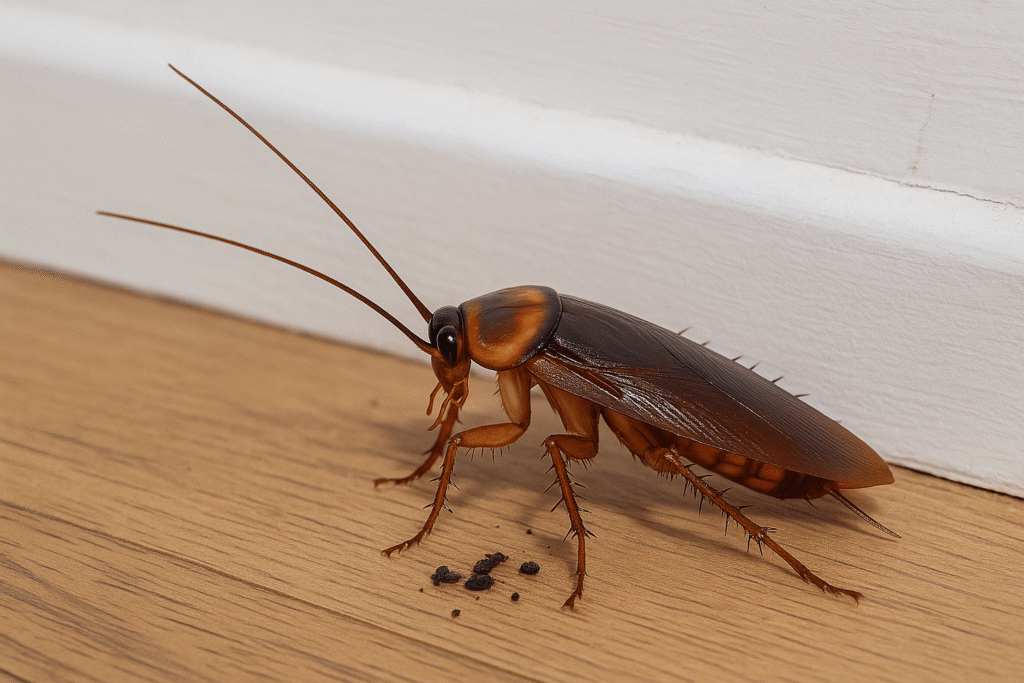
Florida and Georgia are home to a large number of roach species, and they are all notoriously difficult to get rid of. The warm climate and abundant food sources help them thrive in every part of both states. Whether you have palmetto bugs in your garage or German cockroaches in your kitchen, you’ll need help from professional pest exterminators in Atlanta and a targeted approach to eliminate them.
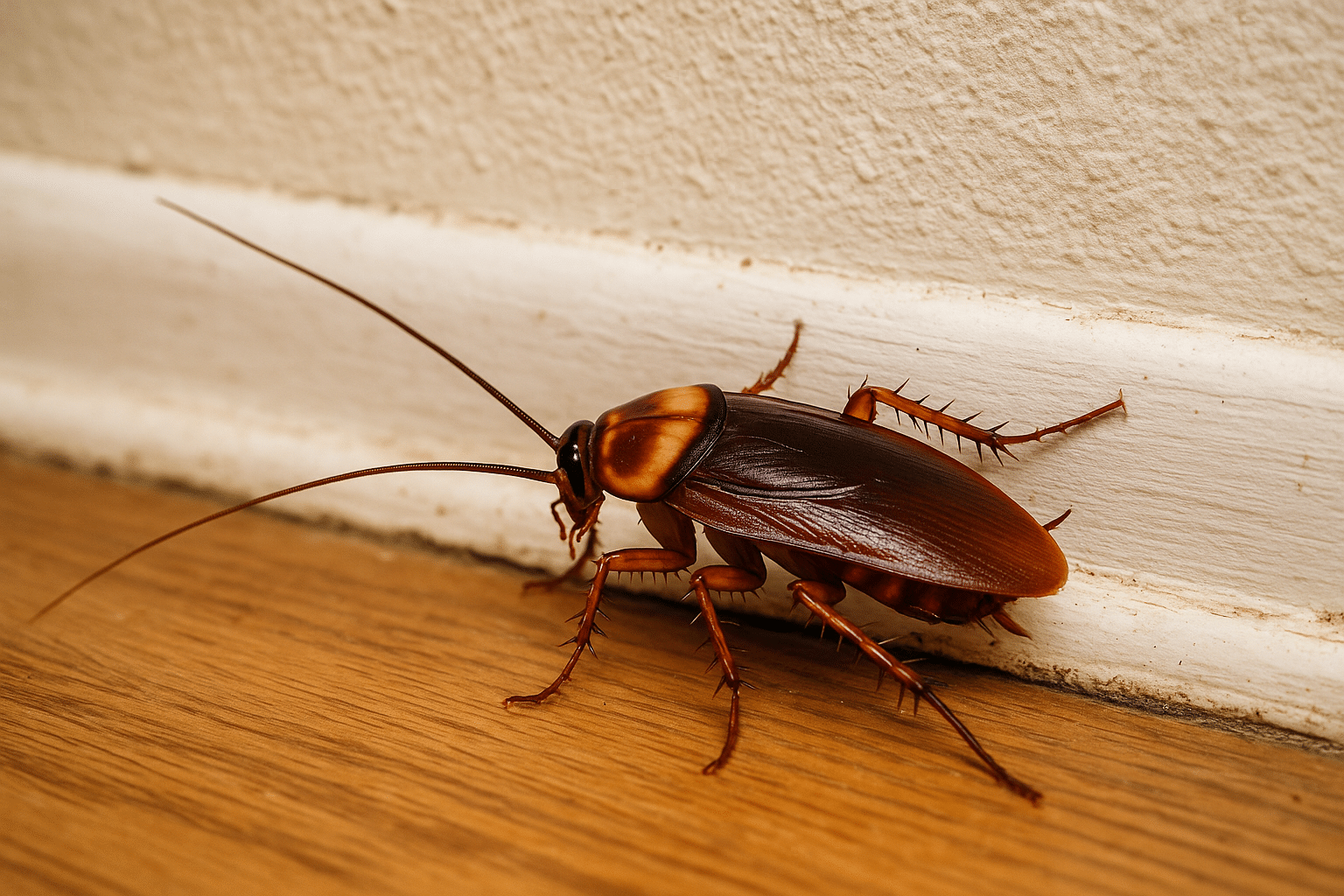
Key Takeaways
- Roaches thrive in Florida and Georgia because the warm, humid climate and dense vegetation give them the perfect environment to breed and find shelter all year.
- Getting rid of cockroaches quickly and for good means tackling the problem step by step, starting with a thorough inspection, removing their access to food and water, and then using targeted treatments that fit your situation.
- Sealing up entry points and keeping your home clean and dry makes it much harder for roaches to come back, and regular monitoring helps stop a new infestation before it gets out of control.
Why Roach Infestations Are So Common in the Southeast
If you have ever wondered why roaches seem to be everywhere in the Southeast, it’s because states like Florida and Georgia provide these pests with everything they need to thrive.
Humidity and Heat
In southern Georgia and the entire state of Florida, cockroaches are active year-round, mostly thanks to the warm, humid weather. The lack of hard freezes and subtropical climate allows them to thrive all year, with no seasonal die offs. Even in the cooler winters in northern parts of Georgia, the heated interiors allow many species to continue breeding for the entire year. With very little slowdown in breeding activity, cockroach populations continue to get larger and larger as time goes on.
Dense Vegetation
The dense vegetation found around structures in Florida and Georgia create ideal nesting locations for some cockroach species, like American cockroaches (palmetto bugs) and smokeybrown cockroaches. These roaches typically nest in plant debris, mulch beds, palm litter, and wood piles because they provide the moisture and shade needed to thrive. When weather conditions shift, these cockroaches often wander into whatever structure they happen to be nesting near.
Urban Areas
Urban areas are home to many cockroach attractants and the number of highly populated areas in both states encourages rapid cockroach growth. The high building density in these areas concentrates food, water, and shelter into relatively small areas, giving roaches ample opportunities to travel between nesting and feeding areas using storm drains, sewers, utility chassis, and shared walls to move from one property to another. The most common roach species to thrive in urban settings is the German cockroach.
Frequent Rain and Storms
Bad weather and excessive rainfall from tropical systems and hurricanes often drives cockroaches into homes and businesses when their sewer or outdoor habitats become flooded. To find shelter, roaches can enter your property through drains, vents, foundation cracks, gaps around doors and windows, and many other small openings. This behavior leads to large spikes in cockroach infestations after each heavy rainstorm.
Older Housing Stock
The Southeast is also home to a large amount of older housing stock. Unless they are properly maintained over the years, aging buildings tend to develop settlement cracks, loose plumbing, warped foundations, and degraded seals and weatherstripping. Cockroaches can easily take advantage of these vulnerabilities to enter buildings where they set up nests and look for food.
Most Common Roaches in Florida and Georgia
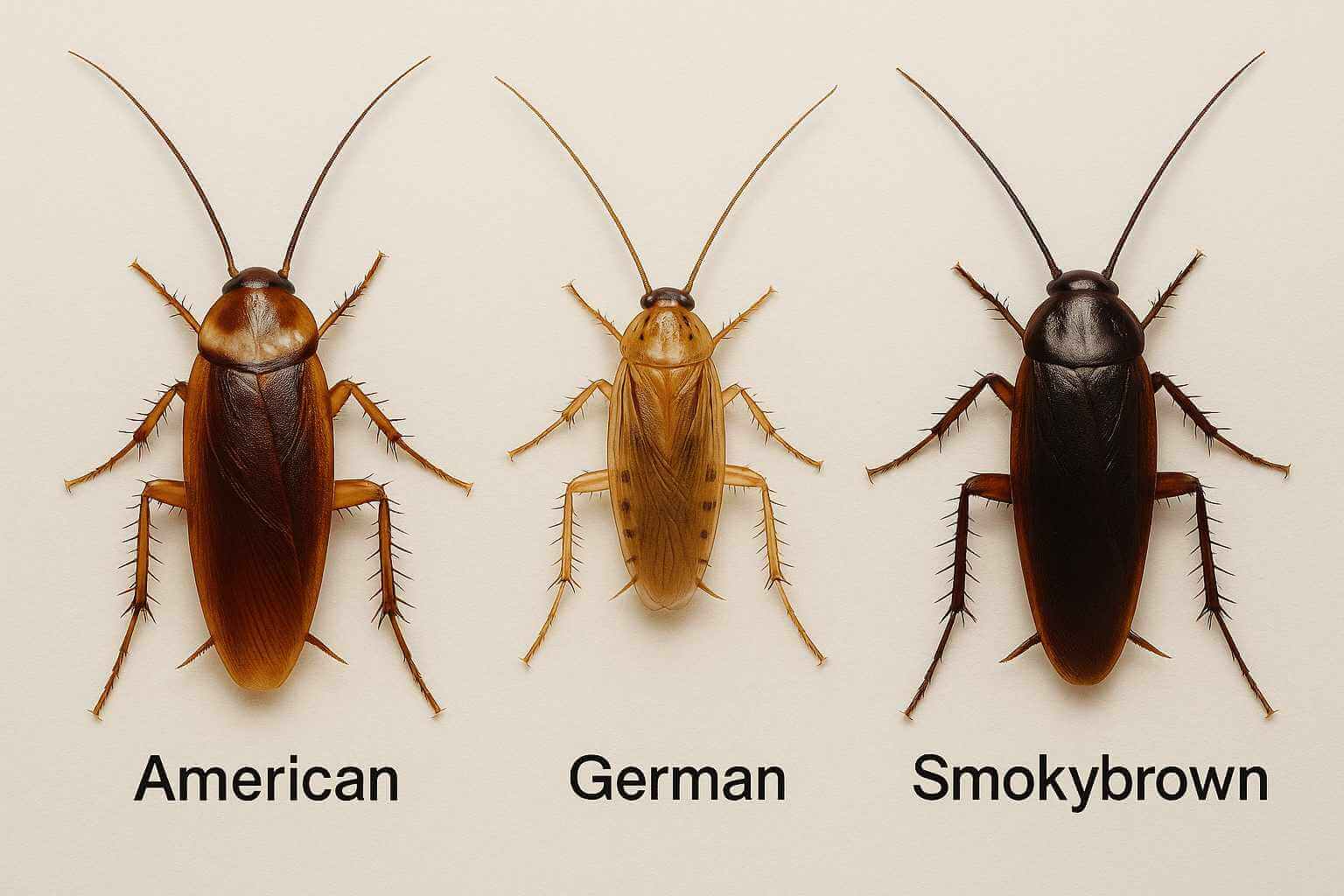
The process of getting rid of cockroaches is different depending on the species you are dealing with. Each type has a preferred environment and food source, and by accurately identifying the species in your home or business, you can develop a treatment plan that is guaranteed to work, as long as the method is applied correctly.
| Cockroach Type | What They Look Like | Where You Are Likely to See Them |
| American Cockroach (Palmetto Bug) | Big, about 1.5 to 2 inches long, reddish brown, runs fast and can glide | In damp spots such as bathrooms, basements, sewers, floor drains, or hiding under large appliances |
| German Cockroach | Small, about half an inch long, light brown with two dark stripes on the head, breeds very quickly | Mostly in kitchens and bathrooms, inside cabinets, around stoves and dishwashers, behind refrigerators, or inside warm electronics |
| Smokybrown Cockroach | Medium to large, shiny dark mahogany color | Often in attics, soffits, garages, sheds, or outside under mulch, palm litter, or leaf piles |
| Brown Banded Cockroach | Small, about half an inch long, yellowish brown with pale bands on the wings, prefers dry areas | Upper kitchen cabinets, bedrooms, behind picture frames, inside wall voids, or inside electronics |
| Florida Woods Cockroach | Large, up to 1.5 inches long, dark brown, slow moving, gives off a strong smell | Usually outdoors in woodpiles, sheds, crawl spaces, or in piles of rotting vegetation |
Signs of a Roach Infestation
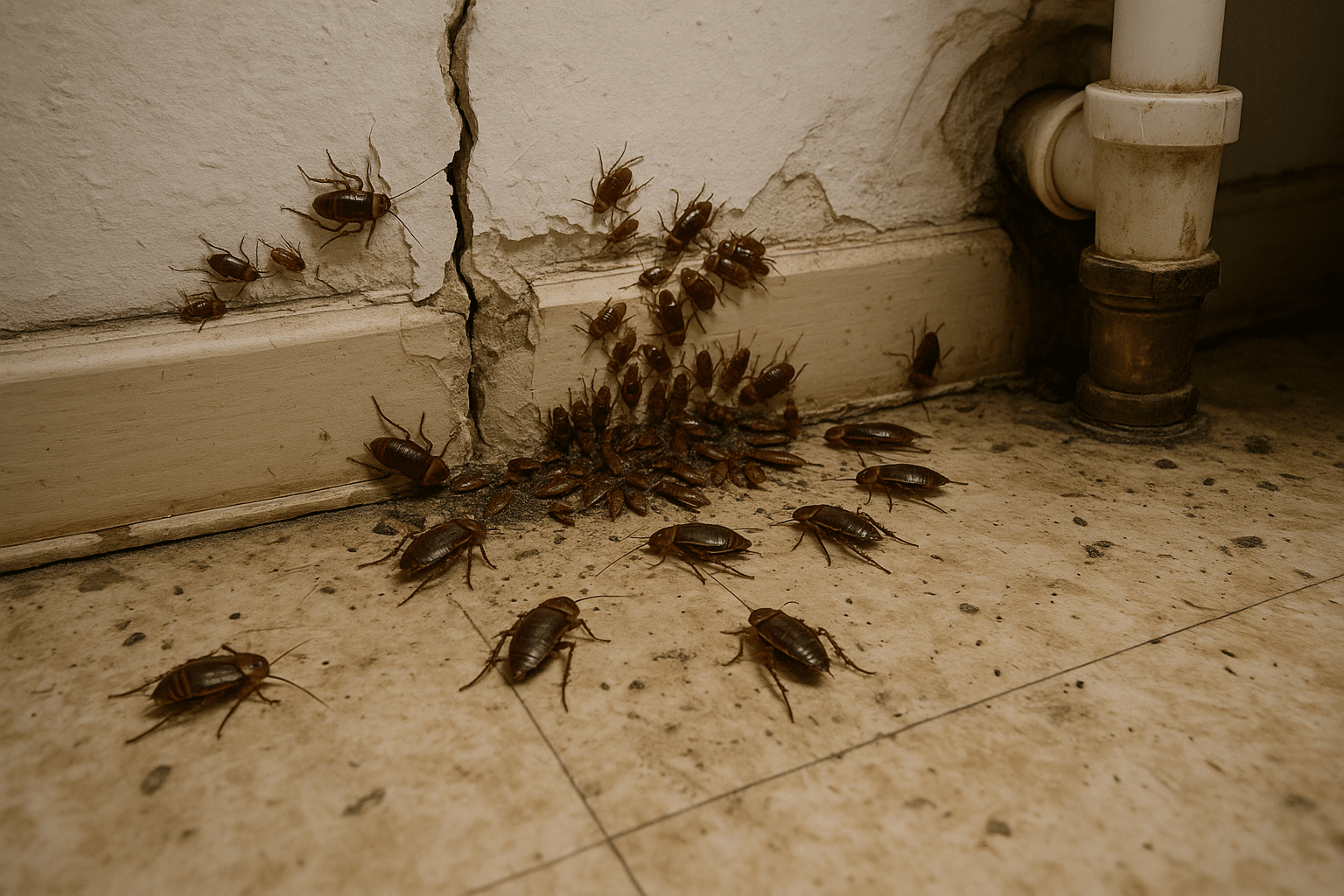
Roaches are very good at hiding and they usually only come out at night. That means many people go a long time before finally discovering that they have a roach infestation. By the time they do start seeing roaches in their kitchens, bathrooms, and food storage areas, the infestation has already become a serious problem.
To confirm whether you have a roach infestation before it gets out of hand, here are some telltale signs to look out for.
- Droppings: Droppings are a clear sign of a roach infestation. If you have German cockroaches, the droppings you find will resemble black pepper or ground coffee. Many of the larger species, however, leave droppings that are a bit larger and have a cylindrical shape. The most common place to find cockroach droppings is in high traffic areas (corners and along baseboards) or near nesting areas.
- Egg Casings: Finding egg casings around your home or business is a serious red flag. It means that the roaches living in your space are thriving and that their numbers are expanding. Roach egg casings are small and brown, and they are shaped like a capsule. Some common areas to find egg casings are in cabinets, under appliances, and behind baseboards.
- Smear Marks: It is no secret that roaches crawl through dirty areas and their bodies can pick up a lot of filth from the places they inhabit. In high-traffic areas, it is not uncommon to see smudge marks and dark trails left behind by roaches. These markings are a mix of wet feces and dirt that the insects have picked up along their path.
- Unpleasant Odors: When infestations are especially heavy, unpleasant odors can be detected near nesting areas. Large groups of roaches give off a strong, musty smell that is a mixture of pheromones and fecal matter.
- Nighttime Sightings: Seeing the actual bugs scurrying around is about as clear a sign as you can get, but it’s not always obvious what kind of insect you are seeing. Roaches are nocturnal so you will see them most often at night. If you turn on the lights in a dark room where roaches are present, they will quickly seek cover.

How to Get Rid of Roaches Fast: Step-by-Step
When you have confirmed that you have a roach infestation at home, and you know what kind of roaches you are dealing with, it is time to develop a plan to get rid of them as quickly as possible. Here are the suggested steps to tackle the problem.
Step 1: Inspection and Identification
The first step in any roach eradication plan is to find out where the roaches are hiding.
Unfortunately, this is also one of the most difficult steps. Roaches can hide in all kinds of areas, making it difficult to pinpoint their nesting locations. One way to find where they are nesting is to use a flashlight to check behind appliances, under sinks, and in cabinets. You can also place sticky traps in high traffic areas or near suspected nesting sites to identify where there is more or less activity.
Some species nest outside and come in when conditions become more favorable indoors. So, you should also carefully inspect all of the possible nesting sites outdoors, such as along walls, next to foundations, in mulch beds, and inside of drains.
Step 2: Eliminate Food and Moisture
The next step in the process is to remove all of the things that attract roaches. Cleaning up food spills and crumbs, and sanitizing surface areas makes it harder for roaches to spring back once the treatments have been applied. Along the same lines, sealing all of your pantry items in airtight containers is another way to restrict roaches from anything that would help them recover from a roach treatment.
It is also good to point out that roaches can live up to a month without food, but they need water at least once a week to stay alive. Where possible, restrict their access to water to speed up the elimination process. A couple of good ways to do that are to seal up any leaky pipes or faucets, and make sure that there is no standing water anywhere in your home or business.
Step 3: Apply Targeted Roach Treatments
There are a lot of ways for a roach treatment to go wrong, but if you apply the right combination of treatment methods for your situation, you can be successful. The difficulty that most people run into is not knowing which methods to use, or how to apply the ones they have chosen. As we mentioned before, roaches are highly resistant to treatments, adapting very quickly to each new threat they come into contact with.
Most effective strategies use an Integrated Pest Management approach for roaches and some combination of the following treatments.
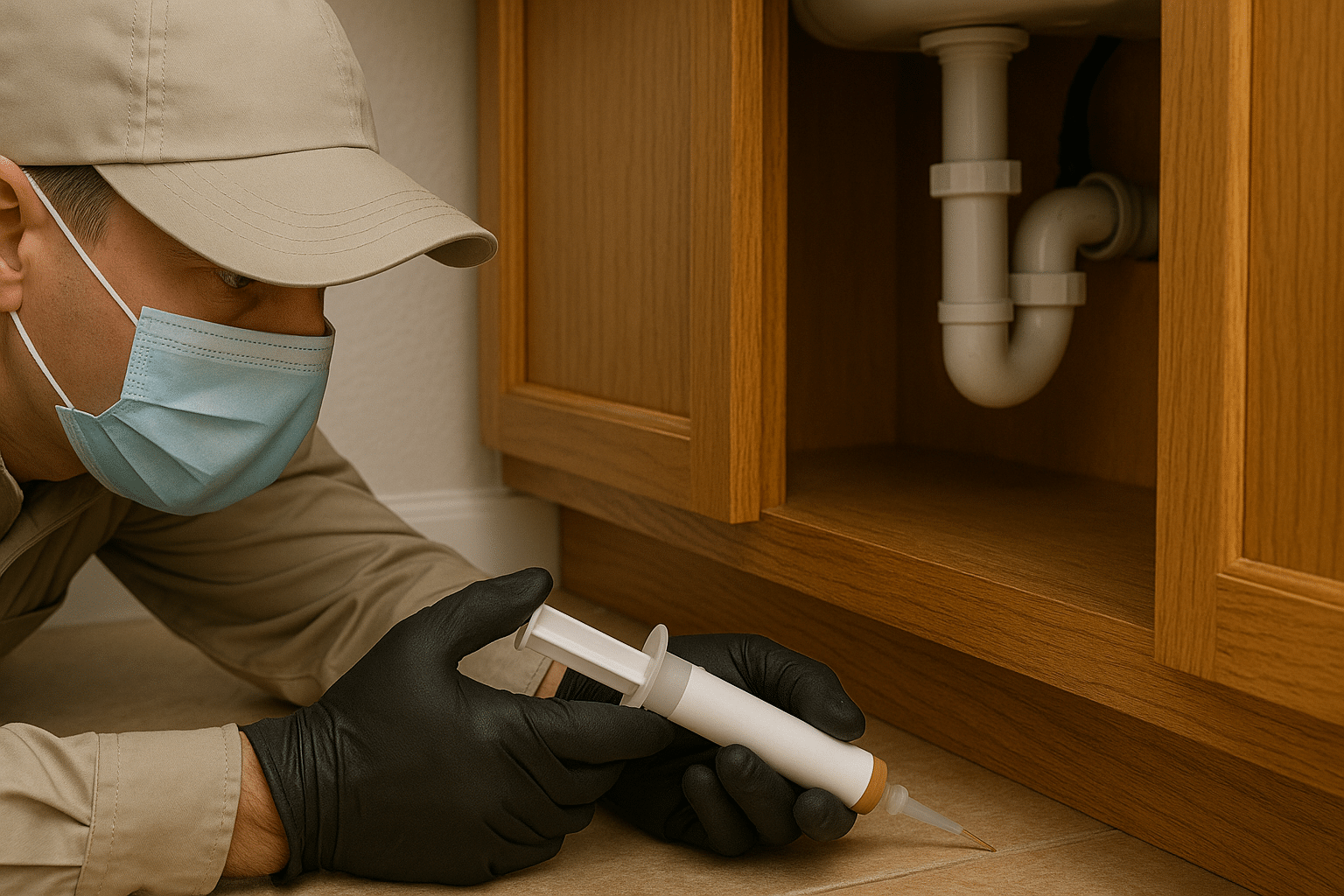
- Gel Baits: Gel baits can be effective against many different roach species. Roaches eat the gel and then carry it back to their nests where they spread it to other roaches. The best places to apply gel baits are under sinks, in cracks, and behind appliances.
- Insect Growth Regulators: Insect growth regulators (also referred to as IGRs) impact the reproductive capabilities of a roach population. The treatment both prevents cockroaches from reaching maturity and stops them from reproducing.
- Dust Insecticides: There are a few different dust-based insecticides that can be effective against cockroaches, including boric acid and diatomaceous earth. Dust insecticides are most effective when applied to high traffic areas where they can coat the bodies of the roaches. Use this treatment in wall voids, behind outlets, and under cabinets.
- Perimeter Sprays: Barriers are also important as they stop roaches from entering your property. These sprays should be applied to exterior entry points like windows, foundation seams, around doors, and in crawl spaces.
Expert Tip -> It is never recommended to apply sprays and baits in the same locations. The sprays can make roaches stay away from your baits, making them ineffective.
Step 4: Seal and Exclude
Once you have successfully eliminated the roaches on your property, the next step is to stop them from coming back. Roaches can get into your home or business in a variety of ways, so your exclusion methods have to be varied as well.
Start by sealing off wall gaps, baseboards, pipe entry points, and electrical chases. Silicone is a popular choice for this. However, if the gaps are too large, stainless steel mesh is also a good option. Installing door sweeps and weather stripping is another important step in the exclusion process as it stops most roaches from crawling under the doors and through gaps in your windows.
Step 5: Ongoing Monitoring and Sanitation
Cockroaches reproduce very quickly and are resistant to many of the treatments we’ve mentioned here, especially if they are applied incorrectly. That is why after every roach control process, you want to set up a follow-up plan to make sure that the roach infestation hasn’t started to come back.
To make sure they are all gone, you can keep the sticky traps down in high-traffic areas and inspect them on a weekly basis. You can also clean behind appliances and keep high-risk areas like trash cans, bathrooms, kitchens, and pet feeding areas very clean. In some cases, you also want to reapply the chemical exclusion boundary periodically.
Proper monitoring and sanitation can be challenging, but when you enlist the help of a good pest control company like Nextgen Pest Solutions to get rid of your roach infestation, you can rest assured that your property will be roach free and all the follow-up steps will be carried out correctly.
Final Thoughts
There are several things that make roach control in Florida and Georgia challenging, including the climate, environmental factors, and infrastructure common in both states. While it is possible to use a proven strategy to become roach free within your home or business, there are several ways that even the best strategies fail. For roaches, the best option for total elimination is often a professional roach control service. Not only will a good pest control company apply the right strategies in the most effective ways, but their work is guaranteed. If the roaches come back, your pest control does too.
If you need fast, reliable help from roach control experts, contact Nextgen Pest Solutions to schedule your free inspection today.