
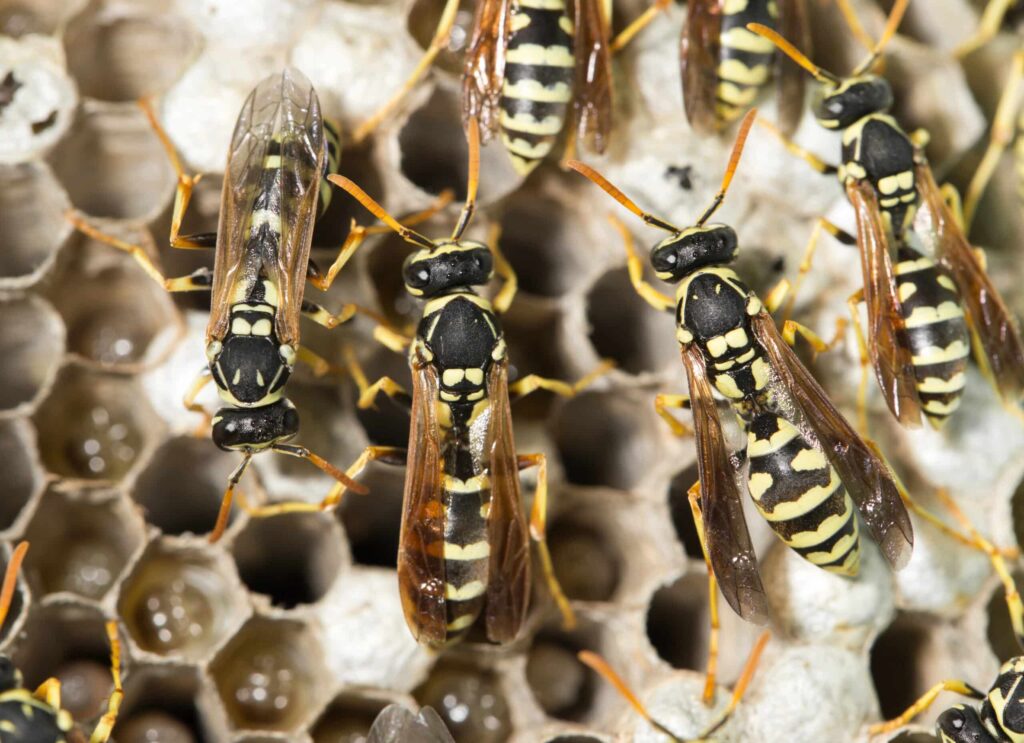
To keep wasps away and get rid of hornets, remove what attracts them (sweet drinks, protein scraps, standing water), seal entry points, and use targeted treatments only when necessary. For large or aggressive nests, call a licensed pest control professional in Alpharetta, especially if someone in your home has sting allergies.
What Attracts Wasps and What Repels Them
Wasps and hornets (Vespidae) are valuable predators and occasional pollinators, but their aggressive defense of nests and painful stings make them risky near people and pets. If a nest is far from activity, leaving it alone can be the eco-friendly choice. If it’s near doors, play areas, or walkways or you’ve had stinging-insect allergies, removal is justified.
Common Wasp Attractants
Wasps are drawn to places where they can easily find food, moisture, and nesting spots. Once they discover these resources, they’re likely to return and build nests nearby.
- Sweets & proteins: soda cans, fruit trays, PB&J, deli meats
- Smells & scraps: open bins, grill grease, compost without lids
- Water sources: dripping spigots, birdbaths, AC condensate
- Shelter: eaves, soffits, attic/wall voids, shrubs/trees
What repels wasps?
Strong sanitation + exclusion is your #1 “repellent.” Scents like peppermint oil may help as light deterrents around entry points, but they’re not a stand-alone solution against active nests.
Fast Identification: Bees vs. Wasps vs. Hornets
- Bees (Apidae): fuzzy, rounder bodies; mostly pollen/nectar; can usually sting once.
- Wasps (Paper wasps, yellowjackets): sleeker, shiny; omnivores; can sting repeatedly.
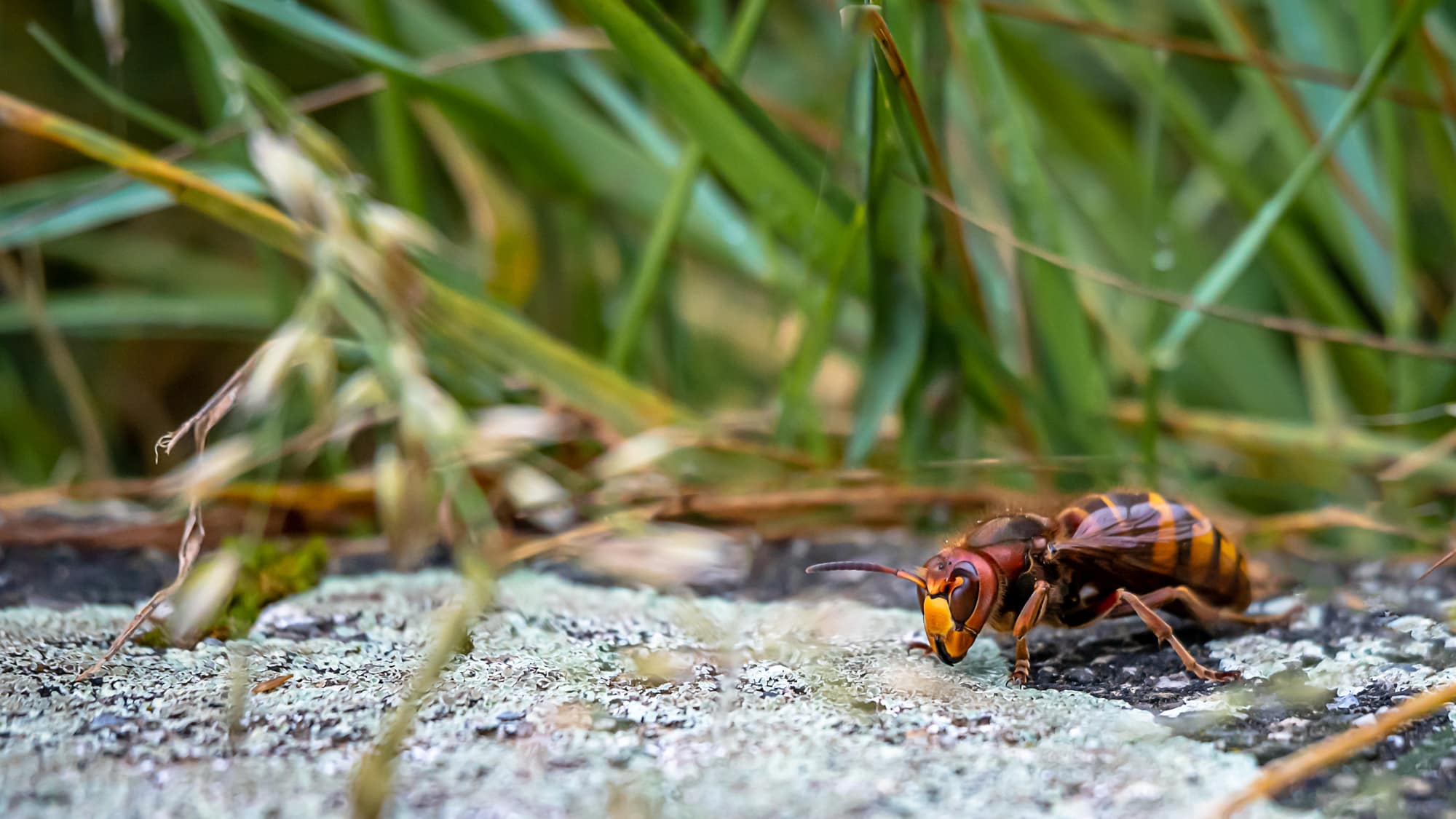
- Hornets (e.g., European hornet): large social wasps; aerial paper nests; can sting repeatedly.
Yellowjackets often nest underground (nickel-size entrance), become very aggressive late summer, and will chase when provoked. Paper wasps build open “umbrella” nests under eaves and are less numerous. Bald-faced hornets build big, enclosed football-shaped aerial nests and defend aggressively.
If you’re not sure what you’re dealing with, assume higher risk and avoid DIY nest disturbance.
How to Keep Wasps Away (and Hornets) From Your House
1. Remove attractants
- Caulk gaps at eaves, soffits, siding penetrations, attic vents (use 1/8” mesh where needed).
- Repair screens; add door sweeps; seal utility cutouts.
2. Remove attractants
- Rinse soda cans; cover drinks outdoors.
- Keep trash closed; wash bins monthly (soap + water).
- Clean grills (grates, drip trays) and store grease in sealed containers.
- Pick up fallen fruit; cover compost.
3. Water control
- Fix leaks, eliminate standing water, adjust irrigation overspray.
3. Landscape tweaks
- Keep shrubs/trees trimmed away from facias.
- Avoid flowering plants near entryways.
5. Spring inspection (crucial!)
- In early spring, look for tiny starter nests under eaves/porches and remove them before populations explode
How to Get Rid of Hornets (and Wasps) Safely and Effectively
Safety first: If you see a large aerial nest, multiple entry points, or underground yellowjacket activity, or if anyone nearby has sting allergies, call a professional. DIY attempts can provoke swarm attacks.
If DIY Is Appropriate (small/early nests only)
- Timing: Treat at dusk when activity is lowest.
- PPE: Wear a full bee suit or at minimum thick clothing, closed boots, and veil/face protection. Duct-tape sleeve and pant cuffs.
- Product selection:
1. Wasp “freeze” aerosols: quickly knock down guards at the entrance (stand back 10–20 ft).
2. Residual dust (for wall voids/underground): particles transfer deeper into the nest.
3. Residual liquids with injection wands for enclosed nests.
4. Avoid gasoline or DIY concoctions (dangerous, illegal in many areas, environmentally harmful). - Methods
1. Freeze spray at the entrance to reduce immediate defenders.
2. Apply dust or residual into the opening and around the nest surface.
3. Do not knock the nest down yet. Re-check after 3–7 days; reapply if activity persists.
4. Once inactive, remove and bag aerial nests; collapse and fill ground cavities (sand/soil). - Distraction aids (advanced users): Set bright lights away from you (wasps fly toward light), and position a shop-vac with soapy water near entrances in conjunction with insecticides for large populations. (This is high-risk—best left to pest control professionals)
How to Kill Hornets (Only When Necessary)
The goal is targeted nest elimination, not random swatting. For hornet nests near people, use the two-step approach above (freeze → residual). Remember: hornets can sting repeatedly and defend aggressively. If you can’t reach the entire nest interior (or it’s in a wall void/treetop), don’t attempt it, hire a pro!
Wasp Traps: Do They Work?
- Use baited traps (sweet/protein) to reduce local foragers when a nest is nearby but not on your property or while you schedule removal.
- Placement matters: Position away from patios/play areas, ideally perimeter-side to draw activity away from people.
- Traps won’t eliminate established colonies but can lower sting risk during peak season.
Stings & First Aid
Most wasp and hornet stings cause localized pain, redness, heat, and swelling. Basic care: remove any visible stinger (for bees), wash with soap and water, apply cold compress, consider oral antihistamine or pain reliever.
Allergic reaction? Call emergency services if you see breathing difficulty, throat swelling, widespread hives, dizziness, drop in blood pressure. People with known allergies should carry and know how to use an epinephrine auto-injector.
Wasps and Hornets: Regional Notes & Special Cases
- Late summer/fall: Colonies peak; aggression increases and forage shifts to sweets, so expect more picnic pressure.
- Warm-winter zones: In rare cases, yellowjacket “super nests” can persist across seasons with huge populations. Don’t attempt DIY – professional removal only.
- Murder hornets (Asian giant hornet): Extremely rare and under active monitoring in limited regions; many sightings are misidentified cicada killers or European hornets. If you suspect an invasive hornet, do not engage. Better yet, contact local authorities.
Getting rid of hornets and wasps yourself can be a dangerous proposition. From the risk of multiple insect stings to falling from ladders, this job requires balancing nerves of steel and a healthy degree of respect for the insects. Call Nextgen Pest Solutions today to receive a free quote for wasp and hornet removal.
Frequently Asked Questions:
What smell do wasps hate?
Wasps hate strong scents like peppermint, clove, lemongrass, and geranium. These smells interfere with their ability to locate food and nesting spots. Spraying these essential oils around eaves, windows, and entry points can help repel wasps naturally, though keeping areas clean and sealed is still the best way to keep wasps away from your house.
What month are wasps most aggressive?
Wasps are most aggressive in late summer and early fall, usually from August through September. During this time, colonies are at their largest, and food becomes scarce. Worker wasps grow more defensive and are more likely to sting when protecting their nests, making it the hardest time to remove wasps safely.
Will wasps return to a sprayed nest?
Yes, wasps may return to a sprayed nest if it isn’t completely destroyed or if the queen survives. To prevent this, always remove the wasp nests once there’s no more activity. Proper wasp nest removal and sealing of entry points will stop returning wasps from coming back to the same spot.
Can a dead wasp still sting?
Yes, a dead wasp can still sting for a short time after death. Its stinger can reflexively inject venom if pressed against the skin. Always wear gloves or use tools to handle dead wasps or hornets to avoid accidental stings when trying to eliminate wasps.
How to exterminate wasps when you can’t find the nest?
If you can’t locate the nest, focus on what attracts wasps—sweet drinks, trash, and standing water. Clean up spills, keep lids tight on bins, and remove outdoor food sources. Setting up wasp traps can reduce activity, but if the problem continues, contact a pest control expert who knows how to remove wasps and hornets hidden in walls or underground.
How to keep wasps from coming back to the same spot?
To keep wasps from coming back, remove old nests and clean the area with soapy water to erase scent trails. Seal cracks, gaps, and entry points where they may return. Applying natural deterrents like peppermint oil or clove oil helps repel wasps, while proper sealing keeps them from building nests near your house again.