
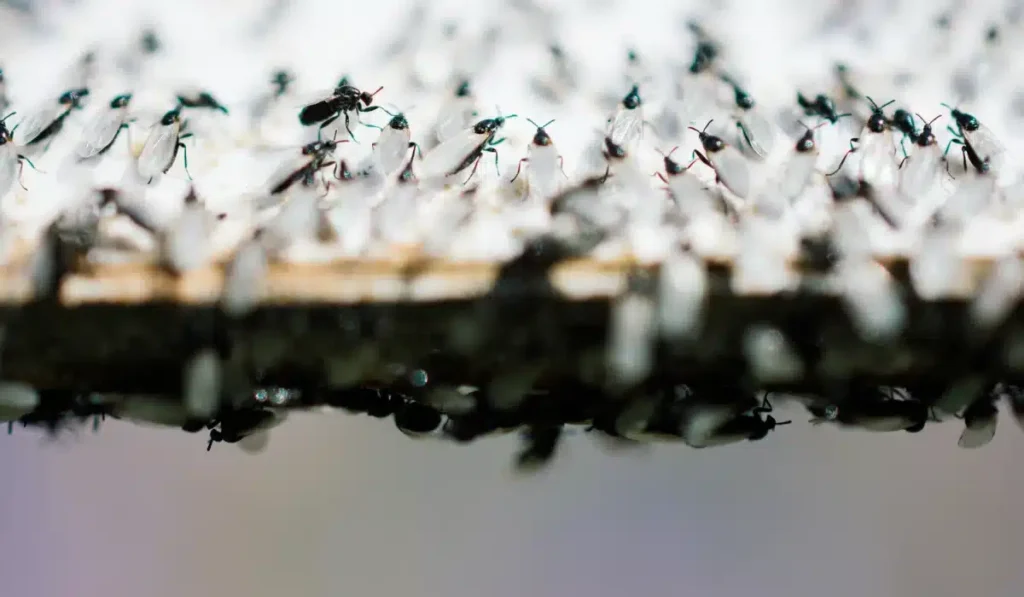
Homeowners across Georgia often confuse flying ants with termites, especially during warm months when both insects swarm. This mix-up can cost you money. Ants cause frustration, but termites damage wood and weaken homes.
Knowing the difference between ants and termites in Georgia helps protect your home and avoid expensive repairs.
At first, ants and termites look similar. Both insects have wings and swarm in spring, but their bodies look different. Termites have straight antennae, thick waists, and wings that match in length. Ants have bent antennae, narrow waists, and front wings longer than their back wings.
This guide explains the key differences between ants and termites, the damage each pest causes, and when to call pest control services in Georgia.
Key Takeaways:
- Ants and termites differ in antennae, waist shape, and wing size.
- Termites cause more structural damage because they eat wood.
- Both swarm in Georgia’s warm, humid months.
- Pest control professionals accurately identify pests and provide long-term treatment.
Video Guide: 10 Common Types of Ants You May Encounter
Watch this video to learn how to recognize different ant species found in Georgia homes and yards. The video shows close-up visuals of size, color, and behavior, helping you spot carpenter ants and other types before they cause damage. Clear visuals help homeowners tell ants from termites during swarming season.
What’s the Difference Between Ants and Termites in Georgia?
Ants and termites in Georgia may look similar when flying, but their physical characteristics and habits differ. Termites have soft, pale bodies with straight antennae and two pairs of wings that match in size. Ants have darker bodies, elbowed antennae, and more extended front wings.
Their diets also set them apart. Termites feed on cellulose in wood, creating hidden tunnels and causing severe termite damage. Carpenter ants don’t eat wood but carve it to build nests, leaving behind small wood shavings called frass.
A termite infestation can destroy a structure from within, while ant damage is usually visible and easier to treat.
Comparison Table: Ants vs Termites
| Feature | Ants | Termites |
|---|---|---|
| Color | Dark brown or black | Creamy white or light brown |
| Waist | Narrow waist | Thick waist |
| Antennae | Elbowed antennae | Straight termite antennae |
| Wings | Front wings longer than hind wings (ant wings) | Equal-length wings |
| Diet | Food crumbs, plants | Cellulose in wooden structures |
| Habitat | Kitchens, attics, walls | Soil and foundations |
| Damage | Creates tunnels but does not eat wood | Eats wood, causes significant damage |
If you spot flying insects and aren’t sure what they are, schedule a visit from a pest control expert who can confirm whether they’re termites or ants and develop a prevention plan.
At Nextgen Pest Solutions, we provide a comprehensive pest control service for Georgia homes. Our team can quickly tell if you have ants or termites and recommend the right pest control service for your Atlanta or Georgia home.
What Does an Ant Look Like in Georgia?
Carpenter ants are the most common wood-nesting ants in Georgia. They are large, dark, and have elbowed antennae and narrow waists.
Some signs of carpenter ants in your house include piles of wood shavings or frass (sawdust-like material) near baseboards, window sills, doorframes, or crawl spaces, and faint rustling noises inside walls.
Flying ants, or winged ants, have front wings that are longer than their hind wings. During humid evenings, they often swarm near lights or windows.
Carpenter ants prefer damp wood and enter homes through cracks, vents, and gaps in siding. After swarming, you may find discarded ant wings near windows or doors.
Key Identification Traits of Ants
- Elbowed antennae and a narrow waist
- Front wings longer than hind wings
- Small piles of frass near damaged wood
- Active during Georgia’s humid spring and summer
If you see signs of an ant infestation, call the professionals. Our pest management experts can locate carpenter ant nests and remove them before they spread across your property.
What Does a Termite Look Like in Georgia?
Georgia has two main termite types. These include subterranean termites and drywood termites.
Subterranean termites live underground and build mud tubes to reach wood. Drywood termites live inside wood, often in attics, walls, or furniture.
People often mistake termite swarmers for flying ants because both have wings. Termite wings match in size, and their antennae stay straight. Common warning signs include discarded wings and mud tubes along foundations or walls.
Key Identification Traits of Termites
- Straight antennae and thick waist
- Equal pairs of wings
- Soft, pale-colored bodies
- Mud tubes near walls or foundations
Termite colonies work nonstop and often cause damage before homeowners notice them. For reliable termite control and protection, contact us before the problem spreads.
Why Are Ants and Termites Often Confused in Georgia?
Ants and termites swarm around the same time, typically in Georgia’s warm, humid spring. It can be hard to distinguish whether you’ve got ants or termites in your home at first glance because they look similar from afar.
However, according to Mississippi State University Extension, you can tell them apart by examining their wings: termites have wings twice as long as their bodies, while ants have shorter wings with more extended front wings and shorter hind wings. Their wings and flight patterns make them hard to distinguish, especially when they gather around lights.
According to the University of Connecticut, both pests prefer moist areas with damp wood. Carpenter ants prefer damp wood, while subterranean termites depend on wet soil to survive. This overlap in the environment often leads to misidentification. Lighting, speed, and color can also blur differences between these flying insects.
Because a wrong diagnosis can delay proper treatment, a professional inspection remains the safest option.
Which Is More Dangerous, Ants or Termites?
Termites cause far more damage than ants. They eat wood and hollow out beams, floors, and supports. In Georgia, subterranean termites pose the biggest risk because they feed constantly from underground nests.
Carpenter ants tunnel through wood but do not eat it. Their damage remains limited and is less costly to repair.
If you suspect termite activity, act quickly to limit damage.
How Do You Get Rid of Ants and Termites in Georgia?
Ants and termites need different treatment methods. Using the correct approach helps stop infestations faster.
Steps for Removing Ants
Start by sealing entry points, removing food sources, and fixing leaks. Keep food stored tightly and clean surfaces often. Professional exterminators can treat nests directly, stopping ants from returning.
Steps for Removing Termites
Termite control starts with inspection. Subterranean termites need soil treatments and bait systems. If you want to get rid of drywood termites effectively, you may need localized or whole-home treatment. Professionals also reduce moisture and seal cracks to block new colonies.
At Nextgen Pest Solutions, we provide complete pest control services for ants and termites, using the latest methods to protect Georgia homes from costly infestations.
When Should You Call a Professional for Ants or Termites in Georgia?
Call a pest control professional if you notice mud tubes, discarded wings, or damaged wood. DIY treatments rarely reach the source of infestations, especially in Georgia’s humid climate.
Our exterminators can identify the pest, assess the level of damage, and provide safe, lasting solutions. Schedule an inspection with our team at the first sign of flying insects indoors.
Making the Right Ant and Termite Control Choice for Your Georgia Home
Knowing the difference between ants and termites in Georgia helps you take action before damage occurs. Ants can be annoying, but termites are the real threat to your home’s foundation.
At Nextgen Pest Solutions, we offer expert pest control to identify, remove, and prevent both ants and termites in Georgia homes.
Contact us today or request a free quote.
FAQs
How can I quickly tell ants from termites in Georgia?
Ants have elbowed antennae, narrow waists, and uneven wings. Termites have straight antennae, thick waists, and equal wings. If you’re unsure, schedule a pest inspection in Georgia.
Which is more dangerous in Georgia, ants or termites?
Termites are more destructive because they eat wood and can cause significant structural damage. Carpenter ants only tunnel through wood. Subterranean termites are prevalent in Georgia and Atlanta.
Does Georgia’s weather affect whether I see ants or termites?
Yes. Warm, humid weather triggers swarming for both species. Spring and early summer in Georgia are the peak seasons for flying ants and termite swarmers.